Here’s a history of sports bars—how they started, evolved, and became a global cultural phenomenon:
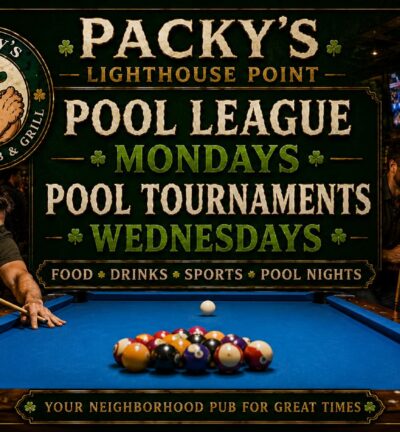
Looking For a late night menu in Pompano Beach Lighthouse Point Area. Visit Packy’s
 What Is a Sports Bar?
A sports bar is a drinking and dining venue that centers around watching sporting events, usually through multiple televisions, often with a bar menu, casual atmosphere, and community vibe. The focus is social watching—fans gathering to cheer, commiserate, and enjoy food and drinks together.
 Origins: Before the Sports Bar
Before dedicated sports bars existed, people watched sports in:
- Pubs & taverns: Betting on horse races and early ball games.
- Bars with a single TV: As TVs became common in the 1950s–60s, bars began showing major sports, especially boxing, college football, and baseball.
But these places didn’t yet shape a distinct “sports-centric” culture.
 The Birth of the Sports Bar — Late 1970s to Early 1980s
The sports bar as a defined concept emerged in the late 1970s and early 1980s in the U.S., particularly in cities with passionate fan bases.
Key factors that made the sports bar possible:
- Television proliferation: Larger screens and multiple TVs became affordable.
- Cable TV expansion: ESPN (launched 1979) provided 24/7 sports content.
- Changing social culture: People wanted places to watch sports as a group, not just at home.
The first recognized sports bar is often credited to Scandinavian Inn in Forest Park, Illinois (near Chicago) in 1979. Owner Jim Jacobsen installed a dozen TVs, tuned to different games, creating a new kind of social space where sports viewing was central to the experience. That formula caught on fast.
 1980s–1990s: Growth and Spread
Cable TV & More Games
- With the rise of cable and sports networks (ESPN, regional sports channels), bars could show more live events year-round.
- Fans wanted venues where multiple games could be watched simultaneously.
Menu and Atmosphere
Sports bars developed:
- Casual bar food: burgers, wings, nachos, fries.
- Team memorabilia: jerseys, pennants, signed balls.
- Fan loyalty spots: rival fans would stake out favorite bars.
Chains and Franchises
By the 1990s, sports bars became commercially branded, including:
- Buffalo Wild Wings (1982) — anchored on wings and watching games.
- ESPN Zone (1998) — a large entertainment complex tied to ESPN.
- Hooters — blended food, drinks, and televised sports.
These solidified the sports bar as a mainstream dining category.
 2000s–2010s: HDTV, Social Atmosphere, and Lifestyle
High-Definition TVs
Wide, flat screens and HD made in-bar viewing more exciting and immersive.
Big Screens & Surround Sound
Bars invested in:
- Large projection screens
- Multiple HD TVs
- Surround sound systems
Turning game nights into events, not just background TV.
Fan Events
- Opening day parties
- Playoff watch events
- Fantasy draft meetups
Sports bars became social hubs for fan communities.
 2010s–Present: Tech, Social Media & Experience Culture
Streaming & Tech Integration
- Some bars now stream games where traditional TV rights aren’t available.
- Mobile apps let patrons order food, pay tabs, and watch stats in real time.
Global Influence
The sports bar model spread worldwide, with local adaptations in:
- UK & Ireland (soccer focus)
- Latin America
- Australia
- Asia
Diverse Experiences
Modern sports bars include:
- Upscale sports lounges with premium seating and menus
- Family-friendly venues
- Draft beer specialty bars
- eSports bars with video gaming focus
 Why Sports Bars Took Off
| Driver | Impact |
|---|---|
| More televised sports | More content to show attracts fans |
| Affordable TVs & cable | Multiple games visible at once |
| Social culture | Collective watching beats watching alone |
| Food + drinks combo | Casual, fun experience |
| Team loyalty | Regular crowd builds community |
 Key Elements That Define a Sports Bar
 Multiple TVs showing different games
Bar food & drink focus
Fan-friendly atmosphere
Frequent sporting events on screens
Seating for groups / social watching
 Fun Facts
- Super Bowl Sunday is typically the busiest day for sports bars.
- Themed nights like trivia, fantasy drafts, tailgate parties, and fan meetups are common.
- Many bars still designate seats or “sections” for major local teams.
Yes — in Massachusetts and much of New England, “packy” or “packie” is slang for a liquor store, and it’s simply short for “package store.” (CyAlcohol)
What that means:
- A package store refers to a retail shop that sells packaged alcoholic beverages (beer, wine, spirits) for people to take home, rather than a bar or place where you drink onsite. (CyAlcohol)
- Locals in Massachusetts (especially around Boston), Rhode Island, New Hampshire, and parts of Connecticut commonly call such stores a packie or packy. (PartyShopMaine)
Where the term comes from:
- The phrase package store goes back to older liquor-control laws and usage (originally referring to stores selling alcohol in its packaged bottles/cans), and packie is just the regional abbreviation of that. (CyAlcohol)
So if someone in New England says they’re “going to the packie,” they mean they’re headed to the liquor store. (PartyShopMaine)